
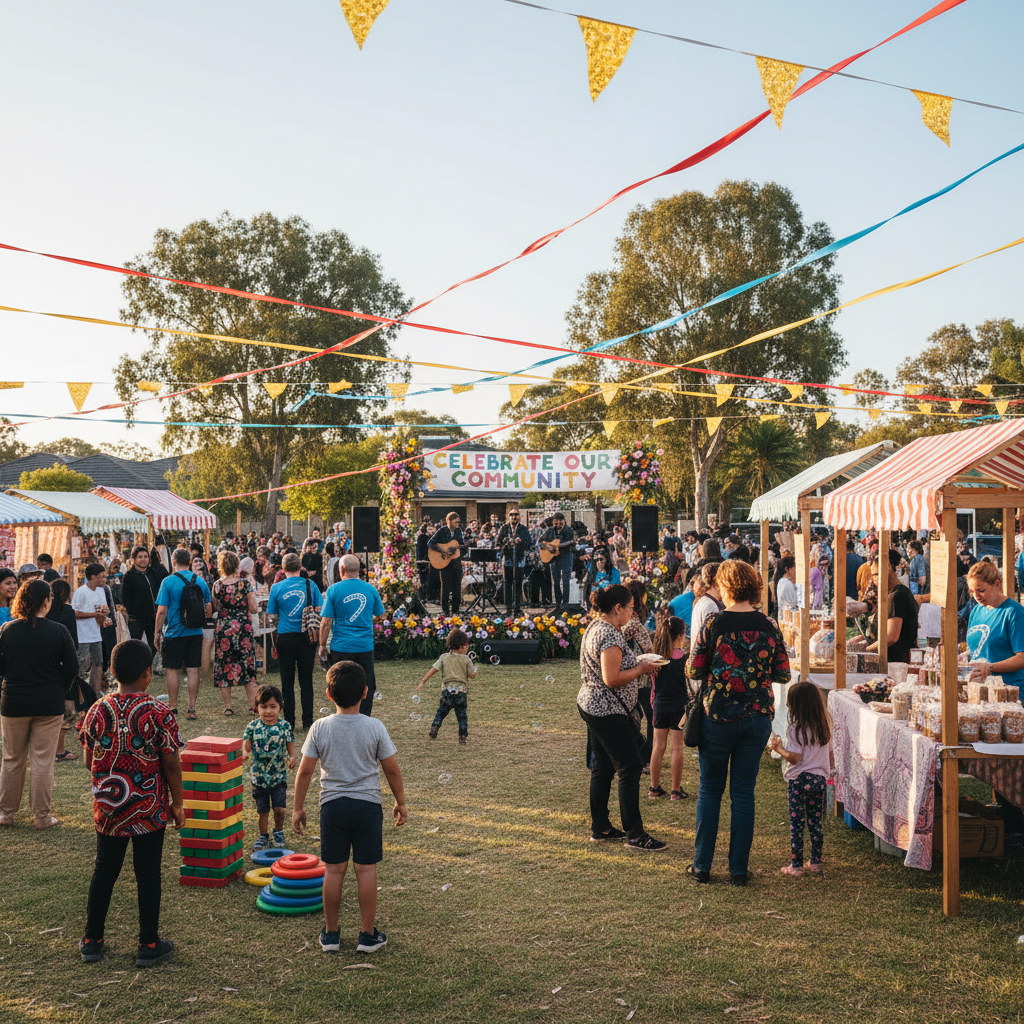
Social Cohesion: The Duct Tape Holding Society Together
Let’s be honest for a second. “Social cohesion” sounds like the kind of term that gets thrown around in stuffy boardrooms by people wearing suits that cost more than your car. It sounds academic. It sounds dry. It sounds like something you’d nod along to while secretly planning your grocery list.
But here’s the kicker: social cohesion is actually the only thing stopping us from descending into absolute chaos.
It is the invisible glue that keeps our communities from falling apart. It’s the reason you trust the barista not to poison your flat white. It’s the reason you wave to your neighbour instead of building a moat around your property. And right now, in Australia, that glue is being tested like cheap adhesive in the summer heat.
We need to talk about it. But more importantly, we need to talk about the people who are actually building it while the rest of the world just talks about it.
What the Bloody Hell is Social Cohesion?
If you strip away the policy jargon and the government speak, social cohesion is pretty simple. It’s about belonging. It’s about trust. It’s about the willingness of people in a society to cooperate with each other to survive and prosper.
Think of it as the vibe check for the entire country.
When social cohesion is high, we feel safe. We feel like we have a stake in the game. We accept that our neighbour might support a different footy team (or worse, a different political party), but we still lend them our lawnmower.
When it’s low? Well, that’s when the cracks start to show. That’s when isolation kicks in, trust evaporates, and we start looking at anyone who is slightly different from us with suspicion rather than curiosity.
In the Australian context, this is tricky. We are a massive, diverse melting pot. We don’t have a single cultural identity; we have hundreds. Maintaining cohesion here isn’t about making everyone the same. It’s about creating a space where we can all be different, together, without tearing each other to shreds.
It’s Not Magic, It’s Infrastructure
Here is the myth we need to bust immediately: Social cohesion doesn’t just happen. It’s not like humidity in Queensland; it doesn’t just descend upon us naturally.
It is built. It is maintained. And it requires infrastructure.
When we talk about infrastructure, everyone thinks of roads, bridges, and the NBN (let’s not go there). But social infrastructure is just as real. And the backbone of that infrastructure? Your local Community Centre, Neighbourhood House, or Settlement House.
These places are the unsung heroes of our democracy. They are the engine rooms of connection. While policymakers debate the theoretical frameworks of unity, the staff and volunteers at your local centre are in the trenches, actually doing the work.
They are the ones running the English classes for new migrants. They are hosting the seniors’ morning teas that combat the silent epidemic of loneliness. They are the ones providing emergency food relief when the cost-of-living crisis hits hard.
They don’t call it “social cohesion strategy.” They call it “Tuesday.”
The Settlement House Legacy: We’ve Been Doing This Forever
Let’s zoom out for a second and put on our international lens. This isn’t just an Aussie invention. We are part of a global lineage of “Settlement Houses.”
Historically, the Settlement movement started over a century ago with a radical idea: that if you want to help a community, you should probably live in it and be part of it. It wasn’t about charity; it was about solidarity. It was about rich and poor living closely together in an interdependent society.
From the original Toynbee Hall in London to the neighbourhood centres in suburban Sydney or regional Victoria, the DNA is the same. These are place-based hubs of democracy. They are the original social networks, long before Mark Zuckerberg decided to ruin the term.
This international perspective is crucial because it reminds us that we possess expertise. The sector knows how to bridge divides because it has been doing it for over 100 years across the globe. We aren’t guessing. We know that proximity breeds empathy. We know that you can’t hate someone once you’ve shared a meal with them or learned how to knit alongside them.
Community Development: The Engine of Social Cohesion
Here’s the big secret behind social cohesion: it doesn’t just magically appear when people share a postcode. It’s powered by community development—the art (and craft) of giving folks the tools, confidence, and opportunities to shape the places they call home.
Community centres are the beating heart of this process. They don’t simply put on sausage sizzles or run yoga on Tuesdays (though, let’s be honest, we’re here for the yoga). They empower people. They help locals uncover their skills, turn ideas into real projects, and take ownership when things need fixing or improving. Whether it’s leadership programs for the next gen, a workshop for emerging entrepreneurs, or simply teaching someone how to fill out an online form without losing their mind—centres build local capacity every single day.
Better yet, this isn’t just about the feel-good. When you help individuals get involved and take action, they don’t just lift themselves—they lift their neighbours, too. It’s like the world’s healthiest ripple effect. Stronger people make stronger communities, and stronger communities are the fortresses of resilience and connection Australia needs right now.
Why This Matters (Before We Lose the Plot)
Now, before the Negative Nancys start muttering that social cohesion is just fluffy nonsense or another spin doctor’s buzzword, let’s get real. Social cohesion is more than a kumbaya fantasy; it’s the duct tape stopping our society from flying apart at the seams. If you think it’s abstract, try living in a community where trust has truly evaporated—no thanks.
Maybe you’ve heard, “Community centres are old hat, no one needs them now, everyone’s online.” Newsflash: while social media is busy dividing us into angry little filter bubbles, real-life places like community centres are where empathy is built brick by brick, laugh by laugh, scone by scone. These aren’t relics—they’re the beating hearts of connection, and trust me, your neighbour can’t borrow a cup of sugar over Zoom.
And for the folks clutching their wallets, thinking, “Why should my taxes fund this?”—just look at the price tag when cohesion breaks down: more isolation, more festering grievances, more extremism, more mopping up after disasters that could have been prevented if someone had felt like they belonged. An ounce of prevention at a neighbourhood house easily beats a pound of bureaucratic cure.
Worried that social cohesion is just about everyone agreeing on everything? Wrong! It’s not forced uniformity; it’s healthy, messy, shouty, neighbourly diversity with mutual respect as the ground rule. It’s a choir, not a solo act.
Then there’s the classic dodge: “It’s someone else’s job.” Sorry, but social glue isn’t manufactured in government basements or corporate boardrooms—it’s stirred up when everyday people roll up their sleeves, share a meal, or volunteer an hour to listen or help. Want change? Start with your own street.
If we don’t actively invest in the places that bring us together, we will drift apart. It’s basic physics.
Community centres are the antidote to polarisation. They are one of the few remaining “third places”—spaces that aren’t your home and aren’t your work—where you can interact with people outside your bubble.
If you want to fight extremism? Fund a youth drop-in centre.
If you want to combat racism? Support a multicultural playgroup.
If you want to stop the erosion of trust in democracy? Back the neighbourhood house that helps people navigate the terrifying maze of government services.
Stop Overlooking the Experts
This is the part that gets me heated. Governments and large organisations love to commission reports on social cohesion. They love to hold inquiries. They love to wring their hands and ask, “How do we fix this?”
The answer is staring them in the face. It’s right down the street, probably next to the library or the park.
Community and neighbourhood centres are the experts. They are the boots on the ground. They know the names of the people falling through the cracks. They know which streets are struggling and which families need support. They are the first responders to a social crisis.
Yet, they are constantly fighting for scraps of funding, justifying their existence on spreadsheets that can’t possibly capture the value of a conversation that saved a life or a program that stopped a kid from going off the rails.
It’s time to stop treating these centres like nice-to-have community hobbies. They are essential services. They are the strategic defence against social collapse.
The Call to Action: Get in the Arena
So, here is the challenge.
Don’t just rely on the vibe. Don’t assume someone else is handling the “community” part of your community.
Find your local Neighbourhood Centre, Community House, or Settlement House. Walk in the door.
Join them. Become a member.
Volunteer. Even if it’s just for an hour to stack chairs or pour tea.
Donate. Keep the lights on so they can keep the hope alive.
Advocate. Tell your local MP that if they really care about social cohesion, they need to put their money where their mouth is and fund the infrastructure that creates it.
Social cohesion isn’t a spectator sport. It’s a contact sport. And your local centre is the home ground. Get down there and help them keep the glue sticky.
Because frankly, without them, we’re just a bunch of strangers waiting for the wheels to fall off. And I don’t know about you, but I reckon we can do better than that.




Leave a Reply