
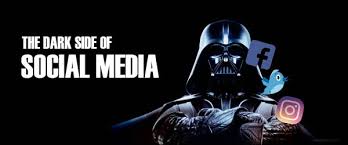
In a world where likes, shares, and retweets are the currency of approval, social media has become more than a platform for networking; it’s a stage where reality is often contorted—a modern-day Colosseum where the echo of one’s voice reverberates within digital walls, often growing louder with each repetition.
It’s a phenomenon that starts off as amusing or seemingly relevant, but these reverberating sounds soon shape our core beliefs. While I love it when someone posts a picture of a cute animal or shares an inspiring quote, I can’t help but feel concerned about the darker side of social media.
The endless scrolling, constant comparison to others, and pressure to present a perfect life online can often lead us down a slippery slope of self-doubt and inadequacy. We begin to believe that our worth is determined by the number of followers we have or the amount of attention our posts receive.
But it’s important to remember that what we see on social media is not always reality. Just like how we carefully curate our profiles, others do the same. We only see snippets of their lives, carefully chosen and edited to present a particular image.
What seems to happen is a volatile mix of affirmation and illusion, leading users to believe their rhetoric regardless of its grounding. This blog post tries to unpack the rabbit hole of social media’s echo chambers and how they affect our work, relationships, mental health, and, ultimately, our grasp of reality.
The Birth of Belief in the Digital Coliseum
Initially, we share and consume content on social media that aligns with our interests or views. It’s funny, engaging, and satisfying when others agree with us. But as algorithms get to know us better, they feed us more of what they think we want to see. Over time, different perspectives are filtered out, and we’re left gazing into a mirror rather than through a window. What begins as finding community can slowly morph into indoctrination by repetition.
We’re becoming gladiators in an arena of resonating beliefs, and like ancient Rome’s finest, we begin to live the persona. The lines between online persona and authentic self get blurred, and the ideologies that were once ‘shares’ or ‘likes’ for amusement become the dogma we uphold.
The Impact on Attitude and Approach to Work
In a world where remote work and online businesses flourish, digital attitudes inevitably spill over into professional realms. Echo chambers can make us stubborn and resistant to new ideas, impacting our decision-making and creativity. The ‘my way or the highway’ syndrome takes root, and collaboration suffers.
This insularity can stifle groupthink within teams, where innovation is replaced by replicating the same ideas, and genuine progress is stunted. Diversity of thought is one of the greatest assets in any workplace. Yet, it’s under threat in environments where social media’s siren song influences the attitudes of those within it.
The Erosion of Relationships
Our social interactions are becoming casualties of our social media habits. Personal and professional relationships are built on the foundations of understanding and empathy. But when our views become incessant echoes in a chamber that admits no dispute, empathy wanes. We find discomfort in differing opinions, and rather than healthy debate, we encounter conflicts and fractures in relationships. Replicating these content loops can make us overconfident in our views, mistaking frequency for accuracy, and this hubris can lead to alienation. We’re less likely to listen and more inclined to preach, leading to a breakdown in communication and connection with those around us.
A Thrall on Mental Health
An understated yet heavy toll is taken on our mental health. Echo chambers can momentarily boost our egos and amplify fears, insecurities, paranoia and discontent. They curate a world that reinforces our sense of righteousness or bombards us with how we and our friends should think, look, and act.
The result is often a decrease in self-worth, increased anxiety, and, in extreme cases, a detachment from reality as the boundary between the online self and the authentic self becomes increasingly opaque. Mental exhaustion from constantly “performing” or defending our now-embedded beliefs can lead to significant psychological strain.
Cowboy Expertise
This phenomenon has also given rise to ‘cowboys’, where individuals feel a false sense of authority and knowledge on a subject based solely on their exposure to it through social media. With an echo chamber constantly reinforcing their beliefs, they may mistake themselves as experts in a particular field when, in reality, their understanding and perspective are limited and biased.
Increasing individualism and destroying our sense of collective
One of the most concerning effects of social media’s echo chambers is eroding our sense of collective responsibility and accountability yet increasing collective outrage. As we become more entrenched in our beliefs, we may lose sight of the bigger picture and how our actions affect society. This can lead to individualistic thinking and a lack of empathy towards others, which can have damaging and divisive consequences for society.
Conversely, social media’s echo chambers often lead to unhealthy, heard-like reactions as people jump on their bandwagons that are neither healthy nor productive. It reinforces the idea of “us vs. them” and hinders constructive dialogue and collaboration towards solving societal issues. Echo chambers can also contribute to the spread of misinformation, leading to further division and polarisation within communities.
So, how do we navigate through?
The Path to Deafening Silence
Is there a way out of the noise? It calls for conscious consumption and deliberate action.
Firstly, actively seeking diverse viewpoints and engaging with content outside our comfort zone can break down the walls of our echo chambers. Recognising the distinction between ‘popular’ and ‘true’ is essential—popularity does not validate truth.
Secondly, taking regular detoxes from social media gives us space to reflect on our beliefs and attitudes without the constant buzz of validation or opposition. It provides a moment to breathe, evaluate, and reaffirm our perceptions based on a more comprehensive array of experiences. Replacing social media input with genuine interactions and exchanges, studying, and reading can also help restore empathy, critical thinking, and open-mindedness.
The Path to a Harmonious Collective
As individuals, we need to recognise the influence of social media’s echo chambers on our attitudes and actions. We must actively seek out diverse perspectives and engage in respectful dialogue with others, even if we disagree.
In addition, social media platforms are responsible for addressing the issue of echo chambers by promoting diverse content and fact-checking information. We also need to educate ourselves on media literacy, understanding how algorithms work and how they shape our online experiences.
We must break free from our echo chambers to foster healthy relationships, critical thinking, empathy, and progress as individuals and a collective.
Lastly, and perhaps most challenging, is encouraging digital platforms to re-evaluate the algorithms that create these all-too-comfortable echo chambers. It would take a seismic shift in social media design philosophy, but facilitating a more balanced discourse online could help bridge the growing chasms in our society.
Conclusion
The irony that social media, designed to connect us, can lead to intellectual isolation and belief in “our bull” isn’t lost in the din. However, we have the tools to redirect our path as individuals and as a collective. We’re at risk of becoming caricatures of relatable content; actionable awareness of the situation can lead us back to where social media is a tool for genuine connection and personal growth rather than the walls within which we willingly confine ourselves.




Leave a Reply