
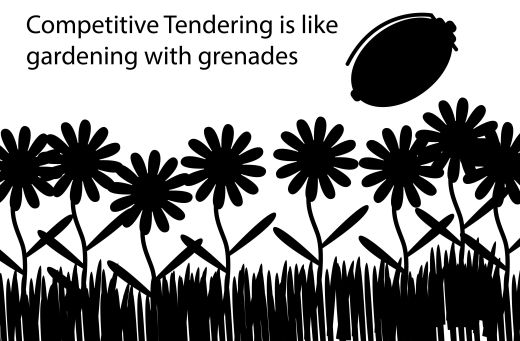
If you’ve spent time in the NGO sector, you’ll know that funding is the lifeblood of our organisations. Yet, how we secure that funding can often feel like a never-ending battle royale. Enter competitive tendering, a process that’s supposed to ensure fairness and efficiency but usually creates more problems than it solves. Competitive tendering is not the knight in shining armour we’ve been led to believe.
Prioritising Cost Over Quality
First things first—competitive tendering often prioritizes cost over quality. In a bid to stretch every dollar, funding bodies frequently award contracts to the lowest bidder. While this might make the accountants happy, it doesn’t necessarily mean the services provided will be the most effective. Imagine selecting a surgeon based solely on their fee rather than their success rate. The result? Services that could be lacklustre at best and downright ineffective at worst.
Complexity Favors the Big Fish
The tendering process is notoriously complex and time-consuming. Larger organisations with robust administrative teams can usually manage the bureaucracy without breaking a sweat. However, smaller, local NGOs—often the ones with the deepest community connections—find themselves out of the race before it even begins. This exclusion isn’t just unfair; it’s detrimental to the very communities we aim to serve. It’s like asking a local corner store to compete with a supermarket chain on marketing budgets—it’s never a fair fight.
Competition Over Collaboration
The competitive nature of tendering fosters a culture of rivalry rather than collaboration. NGOs end up working in silos, guarding their ‘secret sauce’ rather than sharing knowledge and resources that could benefit the sector as a whole. Imagine if the Avengers decided to compete for who gets to save the world instead of teaming up. The result? Less effective solutions and missed opportunities for genuine impact.
Misplaced Focus on Outcomes
Competitive tendering often focuses on immediate outcomes and outputs rather than the long-term impact on communities. This fixation can lead to cookie-cutter services that don’t address the target audience’s needs. It’s akin to prescribing the same medication for headaches, broken bones, and allergies. The real question should be, how are we changing lives and building sustainable futures?
Administrative Burden
Preparing and submitting tenders can become a full-time job due to the paperwork, deadlines, and endless meetings. This administrative burden diverts precious resources and time away from what NGOs do best—engaging with communities and delivering services. It’s like asking a chef to spend more time on grocery shopping lists than cooking meals. The result? Burnout and inefficiencies that ultimately impact service delivery.
Lack of Continuity
One of the most insidious aspects of competitive tendering is the lack of continuity it often brings. Contracts are generally short-term, and there’s no guarantee of sustained funding. This instability is detrimental to the long-term success of projects and the communities they serve. It’s like planting a tree and pulling it up yearly to see if it’s growing. The result? A stunted tree that never reaches its full potential.
Competitive tendering, while well-intentioned, often falls short of delivering on its promise of fairness and efficiency. It prioritises cost over quality, favours larger organisations, fosters a culture of competition, and places undue administrative burdens on NGOs. Most critically, it can detract from the long-term impact of services on the communities that need them most. It’s time to reimagine NGO funding and explore alternatives that prioritize collaboration, quality, and enduring impact.
It’s time to challenge the status quo and demand better. Because when it comes to making a difference, we shouldn’t have to compete—we should collaborate.
Ready to join the conversation? Please share your thoughts in the comments below on how to advocate for more effective funding approaches together.




Leave a Reply